

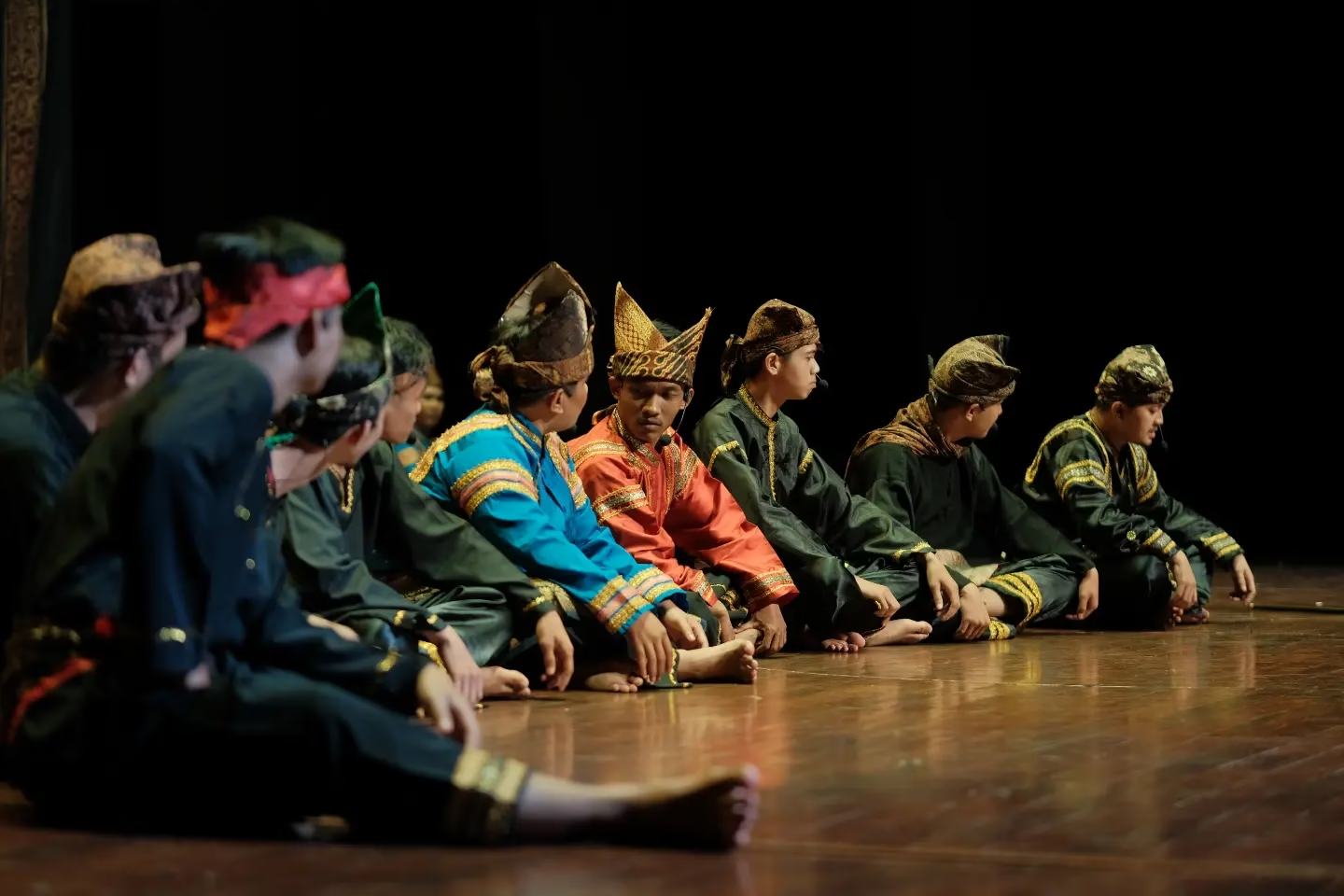
When most visitors think about West Sumatra, they picture beautiful rice fields, traditional Minangkabau houses, delicious rendang, and spectacular mountain scenery.
What many travellers do not realise is that village life continues long after the sun goes down. Across rural West Sumatra, the night is a time for work, culture, socialising, and faith.
For generations, Minangkabau people have spent their evenings pursuing activities that strengthen their livelihoods, preserve traditions, and bring communities together.
From catching eels in muddy rice fields to performing traditional theatre under the stars, these night-time activities provide a fascinating glimpse into a side of West Sumatra that few tourists ever get to experience.
1. Manangkok Baluik (Catching Eels)
One of the most iconic night-time activities in rural West Sumatra is manangkok baluik, or catching eels.
After dinner, villagers head into flooded rice fields carrying flashlights, fishing line, and simple hooks.
The cool night air and darkness encourage eels to emerge from the mud, making them easier to catch.
Walking barefoot through the rice paddies, experienced eel hunters know exactly where to look.
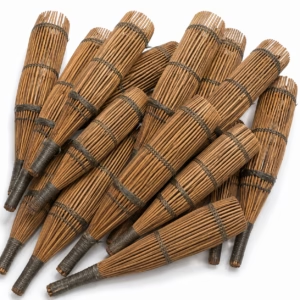
Another common method is using a traditional bamboo trap known as a lukah.
These traps are placed in irrigation channels, rice fields, or muddy waterways in the evening and checked the following morning.
The catch is rarely wasted. Fresh eels may be cooked immediately for dinner, while larger catches are cleaned and preserved.
Some are dried under the sun, while others are smoked over wood fires.
Smoked eels are often used to make rendang baluik, while dried eels are commonly fried and served with spicy red or green chilli.
For many villagers, eel hunting is not only a source of food but also a tradition passed down from one generation to the next.
2. Manangkok Ruwak-Ruwak dan Buruang Puyuah
Another traditional activity that takes place after dark is the hunting and trapping of ruwak-ruwak (waterhens) and buruang puyuah (quail).
The hunt usually begins after dinner and often continues throughout the night.
Hunters work in rice fields, marshes, and areas of dense vegetation where these birds are commonly found.
Modern hunters often use recorded bird calls played through mobile phones and portable speakers to attract birds.
The sounds imitate birds calling for mates, encouraging them to approach the source of the sound.
Several trapping methods are commonly used. Some hunters use bamboo or wire cages fitted with trap doors and pressure triggers.
Others stretch long fishing nets across rice fields at night. Birds flying towards the recorded calls become caught in the nets.
By morning, successful hunters may have dozens of live birds.
These are often sold along village roadsides, where passing motorists stop to purchase them.
It is common to see the birds displayed upside down while awaiting buyers.
Although this practice is becoming less common than it once was, it remains a familiar sight in certain rural parts of West Sumatra.
3. Manembak Ikan (Night Fish Spearing)
One of the most exciting night-time activities in West Sumatra is manembak ikan, or fish spearing.
Once darkness falls, villagers head to rivers, streams, irrigation canals, and flooded rice fields carrying homemade fishing spears and flashlights.
The beam of light reflects off the fish, making them easier to spot in shallow water.
The most commonly targeted species include ikan gabus (snakehead fish), gariang, lele (catfish), puyu, and other freshwater fish.
Traditionally, many of the spears are handmade. A flat piece of wood serves as the body of the spear gun, while sharpened wire forms the spear itself.

Rubber bands provide the force needed to launch the spear underwater.
After a successful catch, fish are often threaded together through the gills using weeds, grass, or strips of young coconut leaves.
Others are simply placed in plastic buckets and carried home.
For many villagers, manembak ikan is both a practical way to obtain food and an enjoyable social activity shared with friends and family.
4. Manunggu Durian Jatuah (Waiting for Durians to Fall)
During durian season, many durian farmers spend their nights in their orchards waiting for ripe fruit to fall from the trees.
Most farmers have a small hut located within their durian farms, providing shelter throughout the night.
From these simple huts, they listen carefully for the unmistakable sound of a durian hitting the ground.
The moment a durian falls, farmers grab their flashlights and rush through the darkness searching for the fruit.
Even when they sleep, many wake several times during the night to patrol the orchard and collect any newly fallen durians.
There is a good reason for this. Farmers do not want to leave ripe durians on the ground until morning. Wild animals may find and eat them before sunrise.
For some families, waiting for durians to fall becomes a social occasion.
Friends and relatives gather in the orchard, drinking coffee, sharing stories, and enjoying the cool evening air.
Conversations continue late into the night while everyone keeps an ear open for the next falling durian.
It is a wonderful example of how work and social life often blend together in rural West Sumatra.
5. Practising Silek
Silek, the traditional martial art of the Minangkabau people, has long been associated with night-time training.
Practice sessions usually begin after Isya prayers when students gather to learn self-defence skills, discipline, respect, and traditional Minangkabau values.
Historically, training often took place outdoors.
Before electric lighting became common, practitioners relied on api unggun (bonfires) or suluah (traditional torches) to illuminate the training area.
The sight of young men practising martial arts by torchlight remains one of the most memorable images of traditional Minangkabau culture.
Training sessions frequently continue until midnight.
Students repeatedly practise movements, footwork, and techniques under the guidance of experienced teachers.
Beyond self-defence, silek plays an important role in preserving cultural identity and strengthening community bonds.
6. Practising Randai
Another cultural tradition commonly practised at night is randai.
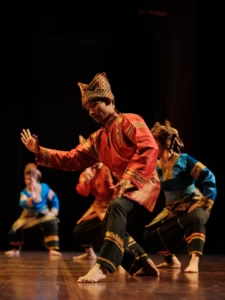
Randai is a uniquely Minangkabau performing art that combines theatre, storytelling, music, dance, singing, and silek.
It tells stories drawn from Minangkabau folklore and local history while showcasing traditional values and customs.
Night-time rehearsals are especially common because participants are usually free from work and school obligations.
Farmers, students, labourers, and office workers can gather together after sunset to practise.
A randai rehearsal is often a lively community event. Participants form circles, chant verses, perform dramatic scenes, and practise choreographed silek movements accompanied by traditional music.
Many villages continue to maintain randai groups that perform during weddings, cultural festivals, and community celebrations.
These evening rehearsals play an important role in keeping the tradition alive for future generations.
7. Main Domino dan Koa di Lapau
As the evening progresses, local lapau or coffee shops become gathering places for men of all ages.
Some come for coffee and conversation. Others come specifically to play games.
The two most popular games are domino and koa.
Domino is widely played throughout Indonesia and often serves as the backdrop for discussions about village life, football, current events, family matters, and local politics.
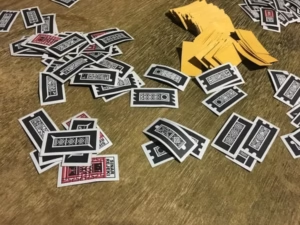
Koa, also known as ceki, is a traditional card game that holds a special place in Minangkabau culture.
The game requires strategy, memory, teamwork, and experience. Skilled players can spend hours carefully analysing their cards while communicating with teammates through subtle play.
The atmosphere inside a busy lapau can be lively and entertaining.
Friendly competition, laughter, debate, and endless cups of coffee create an environment that many visitors find unforgettable.
For travellers wanting to understand Minangkabau social culture, spending an evening in a village lapau is often more revealing than visiting a tourist attraction.
Also read What to Do in Bukittinggi at Night: Serunya Menikmati Malam di Jam Gadang
8. Mangaji di Surau
For many West Sumatran communities, the surau remains an important centre of learning, worship, and community life.
Every evening, children, teenagers, and adults gather to recite the Quran, study Islamic teachings, and participate in religious activities.
Traditionally, the surau played a central role in Minangkabau society.
It was not only a place of worship but also a place where young people learned values, discipline, and community responsibility.
Today, many villages continue this tradition. As night falls, the sound of Quran recitation can often be heard drifting through the village streets.
For residents, mangaji at the surau is an important part of daily life and a reflection of the strong connection between faith and community in West Sumatra.
Experience the Real West Sumatra After Dark
From catching eels in moonlit rice fields to practising silek by torchlight, night-time in West Sumatra offers a fascinating glimpse into authentic Minangkabau life.
These activities reflect not only traditional livelihoods but also the enduring importance of culture, faith, and community.
Most tourists never have the opportunity to witness these experiences.
They remain hidden behind the ordinary tourist trail and are best experienced with local knowledge and guidance.
Interested in seeing this side of West Sumatra for yourself?
We offer authentic evening experiences that allow visitors to join local communities and observe traditional night-time activities firsthand.
We can pick you up from your hotel, take you to one of these unique experiences, provide meals and refreshments, and return you safely to your accommodation afterwards.
Whether you want to watch a randai rehearsal, join an eel-catching adventure in a rice field, spend an evening in a village lapau, or experience life in a durian orchard after dark, we can help you discover a side of West Sumatra that few travellers ever see.
Email us today at admin@westsumatra360.com and experience West Sumatra after sunset.
