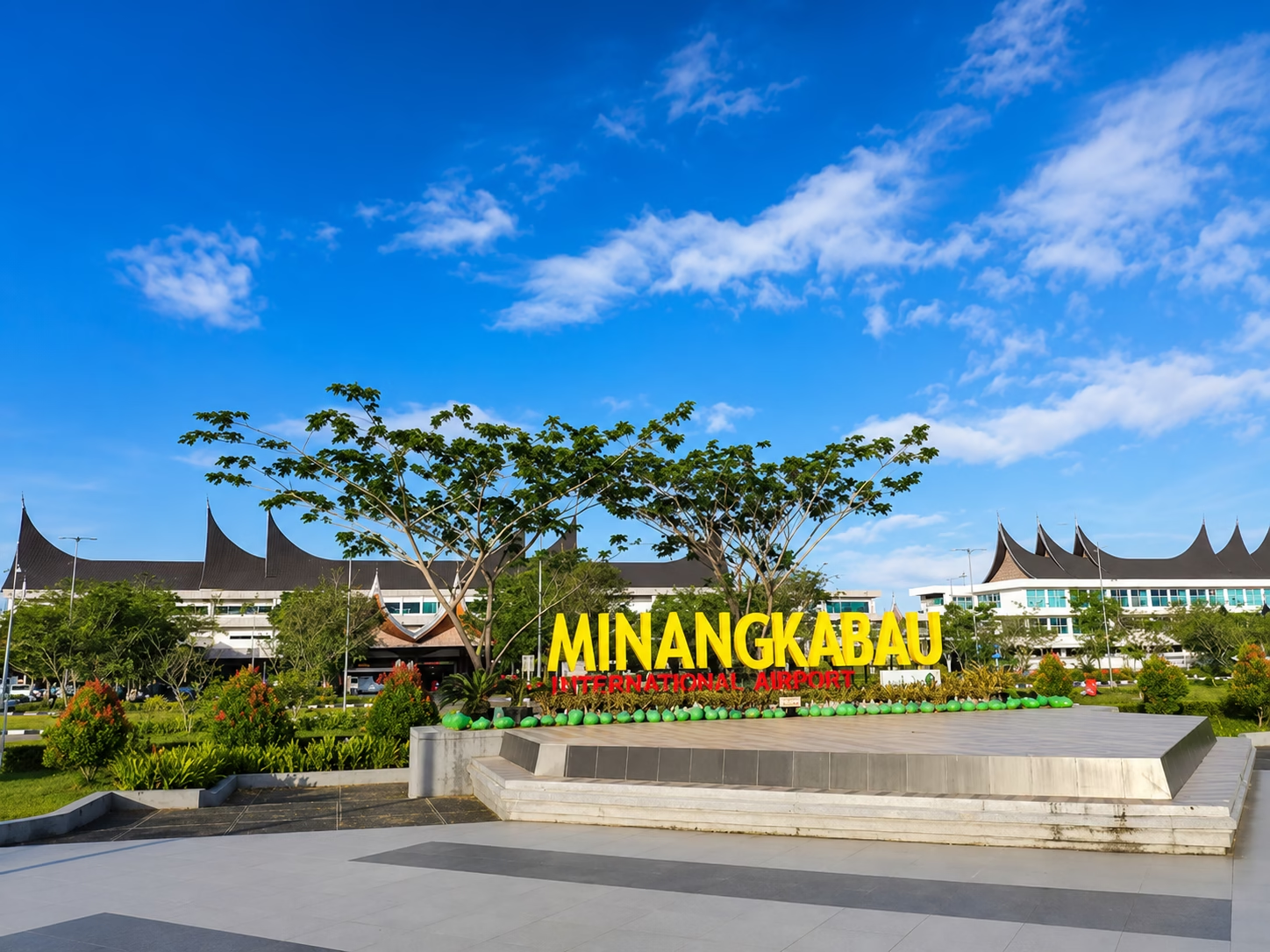
When people think of Minangkabau International Airport (Bandara Internasional Minangkabau/BIM), many assume it is located in Padang City, the capital of West Sumatra.
Surprisingly, that is not true. Here are some fascinating facts about one of Indonesia’s most unique airports.
1. The Airport Is Not Located in Padang City
One of the biggest misconceptions about Minangkabau International Airport is its location.
Although it serves Padang and is commonly associated with the city, the airport is actually located in Katapiang, Batang Anai District, Padang Pariaman Regency (Kabupaten Padang Pariaman).
The airport is approximately 23 kilometres north of Padang City and falls entirely within the administrative boundaries of Padang Pariaman.
2. It Replaced an Airport Located in the Middle of the City
Before BIM was opened, Padang was served by Tabing Airport, which was situated within the urban area of Padang.
As the city expanded, Tabing Airport faced limitations in runway length and future development.
Minangkabau International Airport officially began operations in 2005, providing a larger and more modern facility capable of handling increasing passenger numbers and larger aircraft.
3. It Was Built on Former Agricultural Land
The area where BIM stands today was once dominated by agricultural fields and rural settlements.
The airport transformed what was largely farmland into one of the most important transportation hubs in Sumatra.
4. It Is Named After an Ethnic Group, not a Place
Unlike many airports named after cities or national heroes, Minangkabau International Airport takes its name from the Minangkabau people.
One of Indonesia’s most famous ethnic groups known for their rich culture, unique architecture, and worldwide migration tradition known as merantau.
This makes BIM one of the few airports in Indonesia named after an ethnic identity rather than a geographic location.
5. The Terminal Roof Resembles a Traditional Minangkabau House
One of the first things visitors notice is the distinctive roof design.
The terminal incorporates the iconic Rumah Gadang architecture, featuring roof-lines that curve upward like buffalo horns.
This architectural style immediately introduces visitors to Minangkabau culture before they even leave the airport.
6. It Has a Direct Rail Connection
Minangkabau International Airport was among the first airports outside Java to receive a dedicated airport rail service.
The Minangkabau Express connects the airport directly with Padang City, providing an affordable alternative to taxis and private vehicles.
The railway station is integrated with the airport terminal, making transfers convenient for travellers.
7. It Is West Sumatra’s Main International Gateway
Although several airports exist across West Sumatra, BIM is the province’s primary international gateway.
It serves millions of passengers annually and connects West Sumatra with major Indonesian cities such as Jakarta, Batam, Medan, and Yogyakarta.
The airport has also hosted international flights to destinations such as Kuala Lumpur, Singapore and Jeddah at various times, strengthening West Sumatra’s links with neighbouring countries.
Also Read 7 Facts About Teh Talua: West Sumatra’s Unique Energy Drink
8. It Is a Vital Airport for the Minangkabau Diaspora
The Minangkabau people are famous for migrating across Indonesia and overseas.
Large Minangkabau communities can be found in Jakarta, Pekanbaru, Batam, Medan, Malaysia, Australia, and the Middle East.
Because of this, BIM often becomes a homecoming airport during major holidays such as Eid Al-Fitr, when thousands of Minangkabau residents return to West Sumatra.
9. The Airport Was Designed for Future Expansion
The site of BIM was chosen partly because there was room for future growth.
Unlike the old Tabing Airport, the new airport offers more space for runway improvements, terminal expansion, parking areas, and commercial development.
10. It Became a Lifeline During the 2009 West Sumatra Earthquake
After the devastating earthquake that struck West Sumatra on 30 September 2009.
Minangkabau International Airport played a crucial role in receiving aid, relief workers, and emergency supplies from across Indonesia and around the world.
Its strategic importance became especially evident during the disaster response.
11. It Is Often the First Introduction to Minangkabau Culture
Many airports simply function as transportation hubs, but BIM serves as a cultural showcase.
Visitors can find Minangkabau-inspired architecture, local motifs, traditional designs, and regional food products that provide a glimpse into West Sumatra’s heritage.
12. It Serves One of Indonesia’s Most Scenic Regions
From the airport, travellers can easily reach some of West Sumatra’s most famous attractions, including:
- Bukittinggi
- Lake Maninjau
- Harau Valley
- Pagaruyung Palace
- Mentawai Islands
- Pariaman beaches
- Mandeh Tourism Area
For many visitors, BIM is the starting point for exploring one of Indonesia’s most beautiful provinces.
13. The Name “Minangkabau” Has a Legendary Origin
The word “Minangkabau” comes from a local legend involving a buffalo contest.
According to folklore, the Minangkabau people won a dispute through intelligence rather than warfare, giving rise to the name “Minang Kabau” (victorious buffalo).
The airport proudly carries this cultural identity.
14. It Is Closer to Pariaman Than Many Visitors Realise
Because the airport is located in Padang Pariaman Regency, travellers heading to Pariaman often enjoy shorter travel times than those going to central Padang.
This makes BIM an important gateway not only for Padang but also for the wider coastal region of West Sumatra.
15. The Airport’s IATA Code Is “PDG”
Interestingly, despite not being located in Padang City, the airport uses the IATA airport code PDG, referring to Padang.
This is because the airport primarily serves the provincial capital and is recognised internationally as Padang’s airport.
Minangkabau International Airport is much more than just an airport. It is a cultural landmark, a transportation hub, and an important symbol of West Sumatra.
Perhaps its most interesting fun fact is that despite being known as Padang’s airport, it is actually located in Kabupaten Padang Pariaman, making it one of Indonesia’s best examples of an airport that serves a city while sitting outside its boundaries.
For travellers arriving in West Sumatra, BIM is not just the beginning of a journey, but also the first introduction to the proud and fascinating culture of the Minangkabau people.