

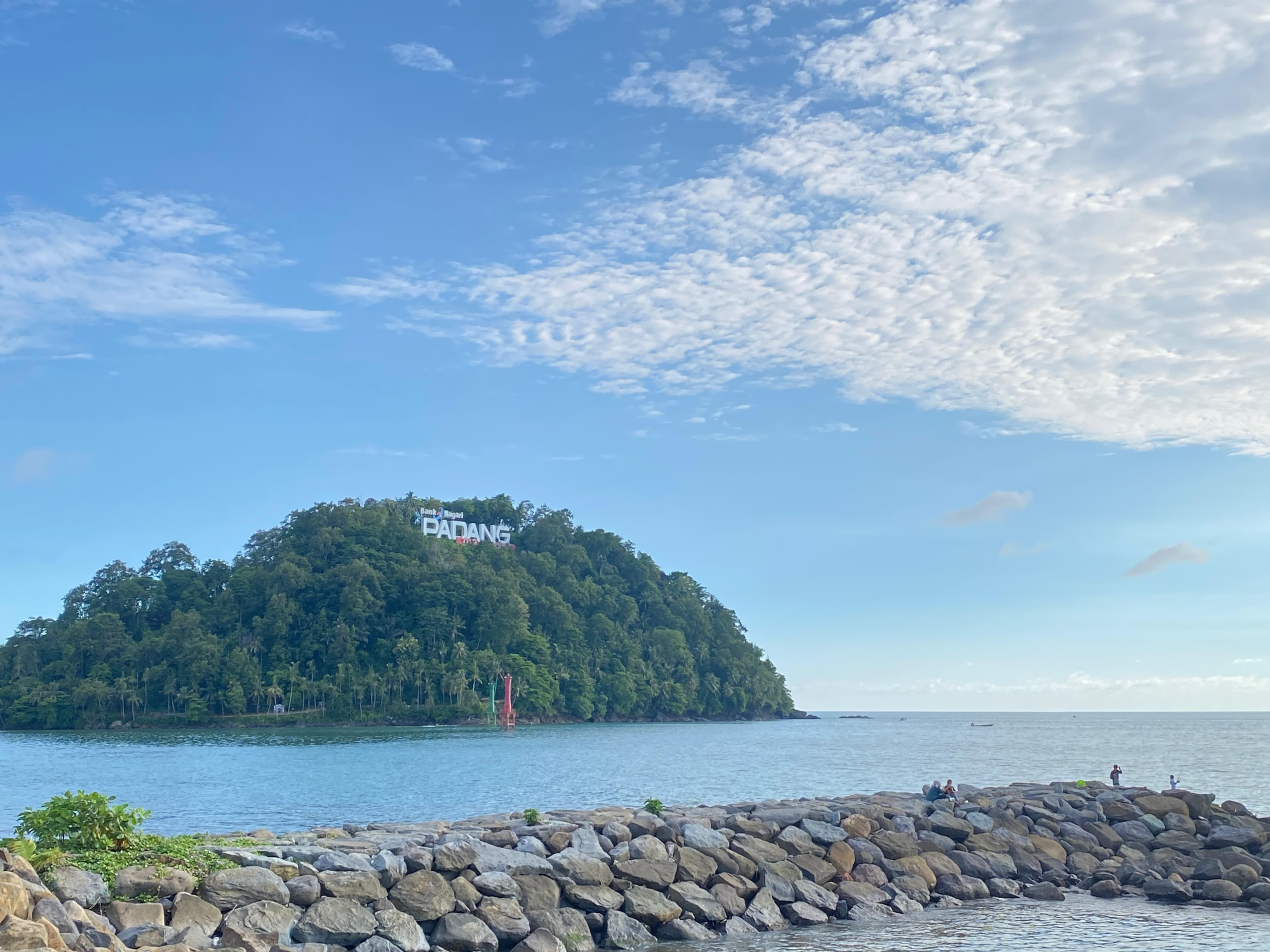
Gunung Padang is one of Padang’s most fascinating landmarks — a hill that rises gracefully in South Padang, right beside the iconic Jembatan Siti Nurbaya.
From the bridge area, the site appears perched above the Batang Arau River, offering panoramic views of both the river and the city beyond.
Rising to around 72 meters above sea level, this hill is not very high, yet it delivers one of the best vantage points in Padang for those who love morning hikes, fresh air, and local history.
Getting There
I began my hike around 6:30 AM, just as the city was beginning to wake up. The cool morning breeze and faint ocean scent made it a perfect start.
I booked an online taxi from my hotel downtown — the ride took only about 10 minutes to cover the 3.5 km distance, costing IDR 37,000.
It’s a short, scenic drive past sleepy streets and riverside houses before arriving at the gate of Gunung Padang.
When we arrived, the gate had already opened, and a friendly officer greeted us, directing us to the small ticket counter nearby.
Inside was a young lady managing payments, with an Eftpos machine, a QR code for QRIS, and paper tickets neatly stacked beside her.
QRIS is widely used among locals, but since I didn’t have it, I offered to pay in cash — she kindly accepted it even though a small sign clearly read “No Cash Payments.”
My sister and I paid IDR 20,000 for two tickets. Once we handed them to the guard, he neatly ripped the stubs and allowed us to pass through the gate.
The Beginning of the Trail
The trail begins at the foot of the hill, with semi-permanent houses lining one side and the calm ocean visible on the other.
It’s a fascinating contrast — simple homes with million-dollar views. I couldn’t help feeling slightly envious of the locals who wake up to such scenery every day.
The path starts easy, paved with concrete and tiled in some areas.
A few sections are uneven, and you’ll want to watch your step — some tiles are loose, and puddles of muddy water splash as you walk by.
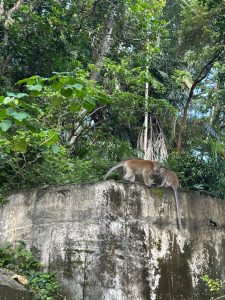
As we moved along, small groups of monkeys appeared, swinging playfully on the fences and walls that separate the route from the ocean below.
They seemed used to hikers, minding their own business while occasionally glancing at us curiously.
Their chatter added a lively soundtrack to the otherwise serene morning.
A short way into the hike, about 200 meters from the entrance, I noticed a crumbling fortress built during the Japanese occupation of Indonesia (1942–1945).
It’s one of those relics that whisper stories from the past — though sadly neglected, the fortress remains a living memory of history tucked quietly on the hillside.
Locals have found their own use for it, mainly as a place to hang laundry, proof that life goes on around monuments of a different era.
Also read How to Spend 24 Hours in Padang, West Sumatra
A Moment to Rest
We stopped briefly at a small hut, a resting shelter where hikers often take a break.
From this pergola, you can see fishermen working below near the river, their boats bobbing gently in the morning tide.
The hike becomes progressively steeper after this point. The concrete stairs grow narrower, and there are no handles to hold on to.
I was thankful for my gym shoes, which gripped well and made the climb far easier.
The air became fresher the higher we went, mixing the earthy scent of wet leaves with the distant sound of birds singing and monkeys calling between trees.
We weren’t alone — several families were hiking up too, including small children who seemed excited to reach the top.
It was lovely to see locals enjoying the same path, making it not just a tourist attraction but a shared community experience.
The Legend of Siti Nurbaya
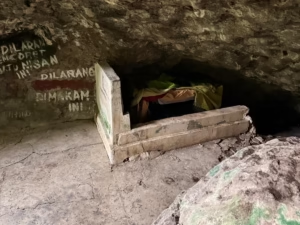
About halfway up, the trail brought us to an intriguing site — “Makam Siti Nurbaya,” a stone grave nestled among rocks and trees.
This spot is steeped in myth and literary connection. According to local belief, it marks the tomb of Siti Nurbaya, the tragic heroine from Marah Rusli’s 1922 Minangkabau novel Sitti Nurbaya: Kasih Tak Sampai.
The story tells of a young noblewoman forced into marriage with a wealthy but cruel man named Datuk Maringgih, separating her from her true love, Samsul Bahri.
She later dies tragically, while her lover avenges her death.
Though the tale is fictional, Siti Nurbaya’s heartbreak has become part of Padang’s cultural identity.
Many locals believe she leapt from Gunung Padang in despair, turning the hill into a symbol of eternal love and tragedy.
Whether the grave marks her real resting place or just serves as a reminder of the legend, the site radiates quiet beauty and nostalgia.
The blend of myth, literature, and history adds emotional depth to the natural scenery, making it more than just a hike — it’s a journey through stories that shaped local culture.
At the Summit
After roughly 20 minutes of steady climbing, we reached the summit. The view was breathtaking.
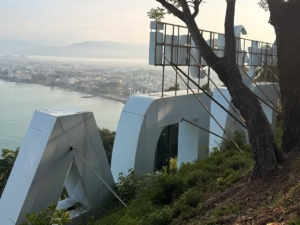
Padang city stretched below us, wrapped in a thin layer of morning mist, rooftops glistening as the sun began to rise.
It felt peaceful — like standing above time itself. The forest canopy offered natural shade, filtering sunlight through green branches that rustled gently in the wind.
Two pergolas sit at the top, offering space to relax and enjoy the view. Despite being early, there were already a few locals selling drinks and snacks.
I bought a bottle of water for IDR 6,000 — fair enough considering these vendors carry everything up by hand.

The famous “Gunung Padang” concrete sign lies just beneath your feet, marking the highest point and the perfect backdrop for photos.
A few benches nearby make it comfortable to sit and take in the horizon while savoring the stillness before heading back down.
The Journey Down
The descent was pleasant but required caution. Moss-covered steps make certain stretches slippery, reminding hikers to move slowly, especially after rain.
I did trip once, but thankfully it wasn’t serious — just a gentle reminder to stay mindful on the return walk.
The air down the slope was warmer, and the ocean breeze carried faint smells of salt and sand.
It’s refreshing to see the same houses, monkeys, and trees from a different angle, almost like watching the trail unfold in reverse.
Before leaving, I booked another online taxi to take us back to the hotel — the same short ride, smooth and easy.
Final Thoughts
A morning hike to Gunung Padang offers far more than just exercise. It’s a quiet adventure into Padang’s soul — combining scenic beauty, heritage, and local legend in one short trail.
Whether you’re drawn by the panoramic views, curious about the wartime fortress, or moved by the story of Siti Nurbaya, the hill rewards you with both physical and cultural discovery.
It’s one of those experiences that remind you how close nature, history, and daily life intertwine in West Sumatra.
Want to experience the same unforgettable morning at Gunung Padang?
Join our guided hike and explore Padang’s legendary hill with local insight and stories you won’t find in guidebooks.
Contact us today to book your hike or learn more about our unique local tours — and start your own Padang adventure, one step at a time.
