

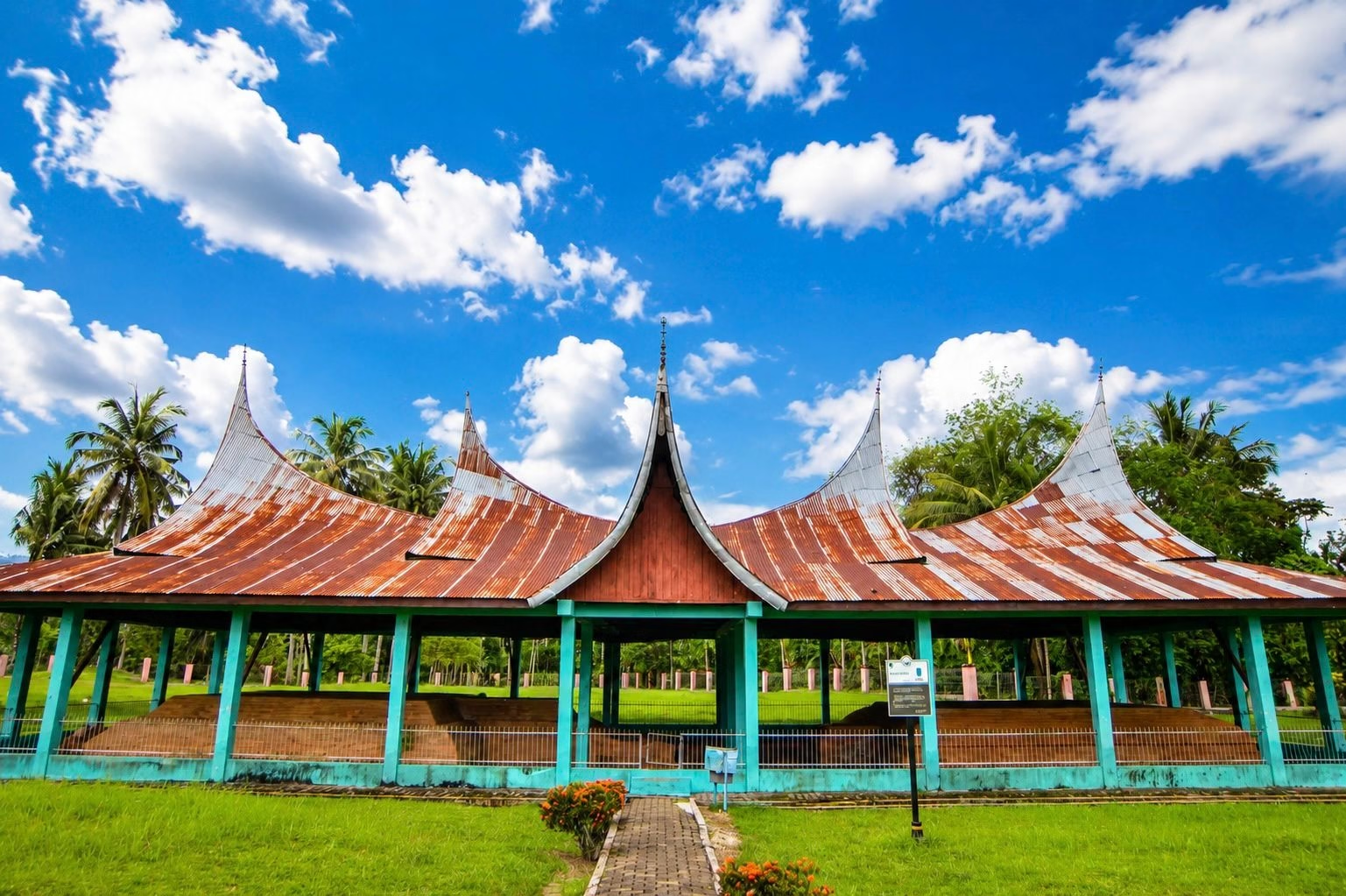
West Sumatra is famous for its beautiful landscapes, Minangkabau cuisine, and strong local traditions.
But beyond the mountains and food, the province also holds important historical sites that reflect an older part of its past.
Scattered across Dharmasraya and Pasaman are temple sites and archaeological remains that show how Hindu-Buddhist civilization once left its mark in West Sumatra.
These places are not only important for history lovers, but also for travelers who enjoy quiet and meaningful destinations with a strong cultural story.
1. Padang Roco Temple
Padang Roco Temple is one of the most important historical sites in West Sumatra.
Located in Dharmasraya, it is closely linked to the Melayu Kingdom, one of the major kingdoms in ancient Sumatra.
The site became historically significant in 1286 CE, when the famous Padang Roco Inscription was created.
The inscription records the arrival of the Amoghapasa statue, which was sent from Java to Dharmasraya by order of King Kertanegara of Singhasari.
This event shows the close relationship between Dharmasraya and the wider political world of the time.
In 1347 CE, the statue was moved again by Adityawarman, and a new inscription was added to its back.
Today, Padang Roco gives visitors a glimpse into how Dharmasraya once grew as a center of religion, culture, and regional power.
2. Pulau Sawah Temple
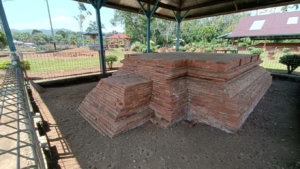
Another important site in Dharmasraya is Pulau Sawah Temple.
Research suggests that this is one of the oldest Buddhist sites in the upper Batanghari area, with origins likely dating to the 8th to 10th century CE.
Its age makes Pulau Sawah especially important because it predates the later period of Adityawarman and appears to belong to the older Malay or Sriwijaya era.
This means the site helps show that Dharmasraya was part of a much longer history of Buddhist activity in Sumatra.
Pulau Sawah may not be as widely known as Padang Roco, but it remains an important part of West Sumatra’s historical heritage.
It adds depth to the story of how Hindu-Buddhist influence spread across the province.
3. Tanjung Medan Temple
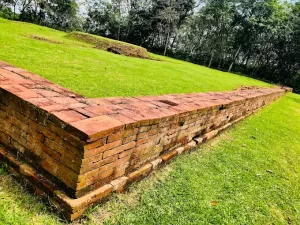
Tanjung Medan Temple is one of the most interesting temple sites in Pasaman.
It is located in Jorong Petok Tanjung Medan, Panti Selatan, about 20 kilometers north of Lubuk Sikaping along the Padang–Medan route.
This ancient brick complex is believed to have been built in the late 12th century to the 13th century CE.
The site shows that Pasaman also played a role in the wider history of ancient Sumatra.
One of the most important moments in its modern history came in the early 1990s, when the site began to receive serious archaeological attention after excavation work revealed the structure beneath the ground.
Later, restoration work helped reveal its form more clearly, and it is now recognized as a cultural heritage site.
The site’s red-brick structures and layout make it a valuable place for both research and historical tourism.
It is a strong example of a heritage destination that is not too crowded, but still rich in historical value.
4. Pancahan and Patani Temple
Pancahan and Patani Temple is another site that adds to the list of Hindu-Buddhist heritage in West Sumatra, especially in Pasaman.
The site was first identified during archaeological research in May 2013.
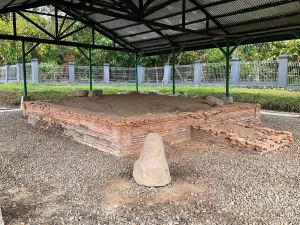
Excavation showed that it contains a brick structure that forms part of a temple base, with a square shape measuring about 6 by 6 meters.
Earlier, Candi Pancahan, which is closely related to this site, was discovered in the early 1990s, and excavation work in 1992 uncovered remains of walls, floors, and foundations.
These findings confirmed that Pasaman was home to important ancient remains that had long been hidden under the surface.
For travelers who enjoy lesser-known heritage destinations, Pancahan Patani adds another layer to the story of ancient West Sumatra.
The link to the Melayu Kingdom
To understand the temples of West Sumatra, it helps to look at the Melayu Dharmasraya Kingdom.
This kingdom was one of the important powers in Sumatra and had strong ties to trade, religion, and culture in the classical period.
Padang Roco is directly tied to a major historical event in 1286 CE, when the Amoghapasa statue was brought to Dharmasraya as a symbolic gift from Singhasari.
Pulau Sawah, on the other hand, appears to belong to an even earlier Buddhist layer, possibly from the 8th to 10th century CE.
These sites show that Dharmasraya was once an important center of activity and not just a local landmark.
It was part of a much larger historical world that connected Sumatra to Java and beyond.
Also Read Panduan Lengkap 3 Wisata Megalit di Tanah Datar
Why these sites matter
The temple sites in West Sumatra are interesting because they combine history, culture, and travel in one experience.
Padang Roco offers strong educational value because of its direct link to the 1286 and 1347 inscriptions.
Tanjung Medan stands out for its ancient brick structures and its late 12th to 13th century origin.

Pancahan and Patani adds the excitement of archaeological discovery from the 1990s and 2013.
For travelers who want more than just scenic views, these sites offer a chance to connect with the past.
They also give West Sumatra a deeper identity as a place with both natural beauty and historical significance.
Tips before visiting
If you plan to visit these sites, make sure to allow enough travel time, especially for locations in Dharmasraya and Pasaman.
Some of these places are far from the city center and may require careful route planning.
Wear comfortable shoes, bring water, and respect the heritage sites while visiting.
These are not just tourist spots. They are important historical remains that deserve care and protection.
West Sumatra’s temple sites prove that the province has a rich and layered history.
From Dharmasraya to Pasaman, the traces of Hindu-Buddhist civilization are still present in ancient sites that tell the story of a long and important past.
For travelers, these places offer more than a visit.
They offer a chance to see another side of West Sumatra, one shaped not only by nature and culture, but also by history.
