

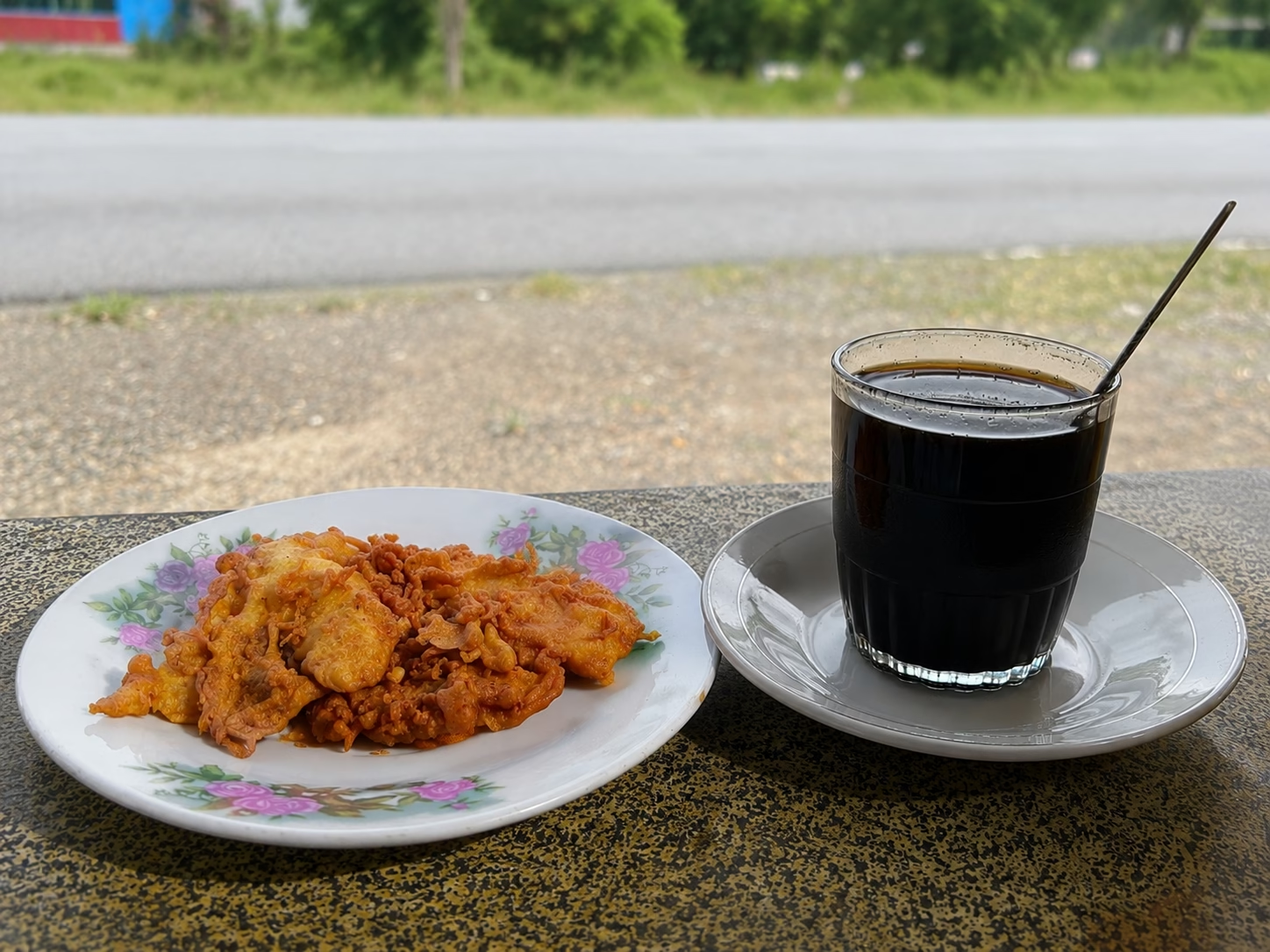
In West Sumatra, coffee is not just a drink. It is a way of life. Among the Minangkabau people, this tradition is known as“mangopi” – the act of drinking coffee together, sharing stories, and connecting with others.
At the heart of this tradition is the kadai (or lapau), a small local shop that plays a much bigger role than just selling coffee.
For generations, the kadai has been a social hub where daily life unfolds.
The Kadai: More Than a Coffee Shop
A kadai is usually a simple shop in a village. It sells basic goods like tea, sugar, snacks, and cigarettes. But its real purpose goes beyond commerce. It is a place where people gather.
In Minangkabau society, the kadai or lapau has long been an informal social space where people exchange information, discuss local issues, and build relationships.
Unlike formal meeting places such as the mosque or community hall, the kadai is open, relaxed, and accessible to everyone.
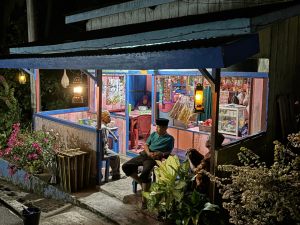
Here, men sit together on wooden benches, drinking coffee from small glasses, talking about everything from farming to politics. It is not unusual for conversations to last for hours.
Morning Coffee and Farmers’ Routine
Traditionally, mangopi begins early in the morning. Many men, especially farmers, stop by their local kadai before going to work in the fields.
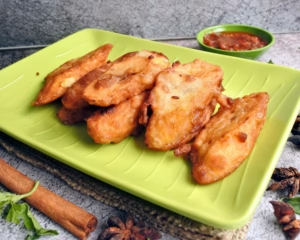
A typical breakfast is simple: a cup of hot coffee and goreng pisang (banana fritters).
This combination is popular across Indonesia and is commonly enjoyed with coffee as a snack or light meal.
This morning ritual serves several purposes. It gives energy for the day ahead, but more importantly, it allows farmers to:
- Share news about weather and crops
- Exchange farming tips
- Discuss community matters
- Maintain social bonds
After finishing their coffee and food, they go to their farms. For many, this daily routine has remained unchanged for decades.

Mangopi as Social Communication
Mangopi is not just about drinking coffee. It is about communication.
Before modern technology, the kadai was one of the main channels for spreading information in the village.
News travelled quickly from one person to another through casual conversation.
People discussed:
- Village decisions
- Family matters
- Economic conditions
- National news
In this sense, the kadai functioned like a social network long before smartphones existed.
Coffee itself plays an important role in this process. Across Sumatra, coffee has deep cultural roots and is closely tied to daily life and community interaction.
The act of sitting together with a cup of coffee encourages openness and connection.
Inviting Through the Kadai
One of the most interesting aspects of Minangkabau culture is how social traditions connect with the kadai.
In the past, when a family wanted to invite people to a wedding or special event, they would often start at the kadai.
Instead of visiting each house one by one, they could meet many people in one place.
The invitation itself was delivered in a respectful and symbolic way.
It was common to offer a cigarette (rokok) as part of the invitation.
In Minangkabau tradition, cigarettes (along with betel leaves) are important cultural symbols representing respect, hospitality, and the intention to invite someone.
The process would usually look like this:
- A man visits the kadai in the evening
- He meets other men gathered there
- He offers a cigarette
- He formally invites them to the event
This method was efficient and culturally meaningful. It allowed personal connection while also reaching many people at once.
Although this practice is less common today, it still exists in some rural villages.
Evening Gatherings and Community Life
The kadai is not only busy in the morning. It also comes alive again in the evening.
After work, men return to relax, drink coffee or tea, and socialise. The atmosphere is different from the morning. It is slower, more relaxed, and often filled with laughter.
Evening mangopi is about:
- Strengthening friendships
- Sharing stories of the day
- Enjoying simple food
- Taking a break from daily responsibilities
For many, this is an important part of mental and social well-being.
The Shift to Modern Coffee Shops
In recent years, the coffee culture in Minangkabau society has started to change.
Younger generations are increasingly drawn to modern coffee shops. These places offer:
- Espresso-based drinks
- Air-conditioned spaces
- Wi-Fi and digital connectivity
- Stylish interiors
This shift reflects a broader trend across Indonesia. Coffee is no longer just a traditional drink; it has become part of a modern lifestyle.
The rise of local coffee brands and cafés shows how coffee culture is evolving with urbanisation and changing consumer preferences.
Today, many young people prefer to meet in cafés rather than traditional kadai. They order iced coffee, milk-based drinks, or sweetened coffee, which differ from the traditional black coffee served in villages.
This change is also influenced by global trends. The growing café culture in Indonesia has transformed coffee into a social and cultural experience, especially among younger generations.
Tradition and Change
Despite these changes, the kadai still exists, especially in rural areas. It continues to serve as a space for community interaction and local identity.
The difference is that now there are two coffee cultures:
1. Traditional culture
- Found in villages
- Focused on social bonding
- Simple food and drinks
- Strong connection to daily routines
2. Modern culture
- Found in cities
- Focused on lifestyle and experience
- Diverse menu
- Influenced by global trends
Both forms reflect the same core idea: coffee brings people together.
Conclusion
Mangopi in Minangkabau society is more than a habit. It is a cultural tradition that connects people, supports communication, and strengthens community life.
The kadai, with its simple setting, has played an essential role in this tradition for generations.
It is a place where farmers begin their day, where news is shared, where invitations are given, and where friendships are maintained.
While modern coffee shops are changing how younger people experience coffee, the spirit of mangopi remains the same.
Whether in a small village kadai or a modern café, the act of sitting together over a cup of coffee continues to be a powerful symbol of connection.
In the end, coffee in West Sumatra is not just about taste. It is about people, culture, and the stories that are shared in every cup.
Experience Mangopi for Yourself
If you are travelling in West Sumatra, don’t miss the chance to experience mangopi.
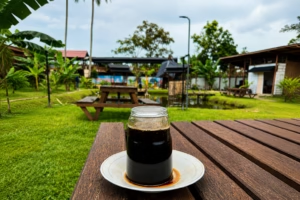
Skip the fancy cafés for a moment. Find a small kadai by the roadside. Order a black coffee. Try goreng pisang. Sit down and observe.
You might not understand every word of the conversation, but you will feel something special, the warmth of community, the rhythm of daily life, and the simplicity that defines Minangkabau culture.
Because in West Sumatra, coffee is not just about what you drink.
It’s about who you sit with.
